An Arrangement Brief for a Nanny Role
Filed under: Practice Notes
The word “nanny” does not, by itself, describe where care takes place or which children are together. Those details become especially important when an arrangement changes but its familiar label stays the same.
Ofsted’s 8 June 2026 explanation for England describes nanny care in the children’s own homes and distinguishes that arrangement from other forms of childcare. It also explains voluntary registration. The practical starting point is therefore a description of the proposed work, before anyone assumes that an existing label settles its registration position.
Change the place, and the question changes
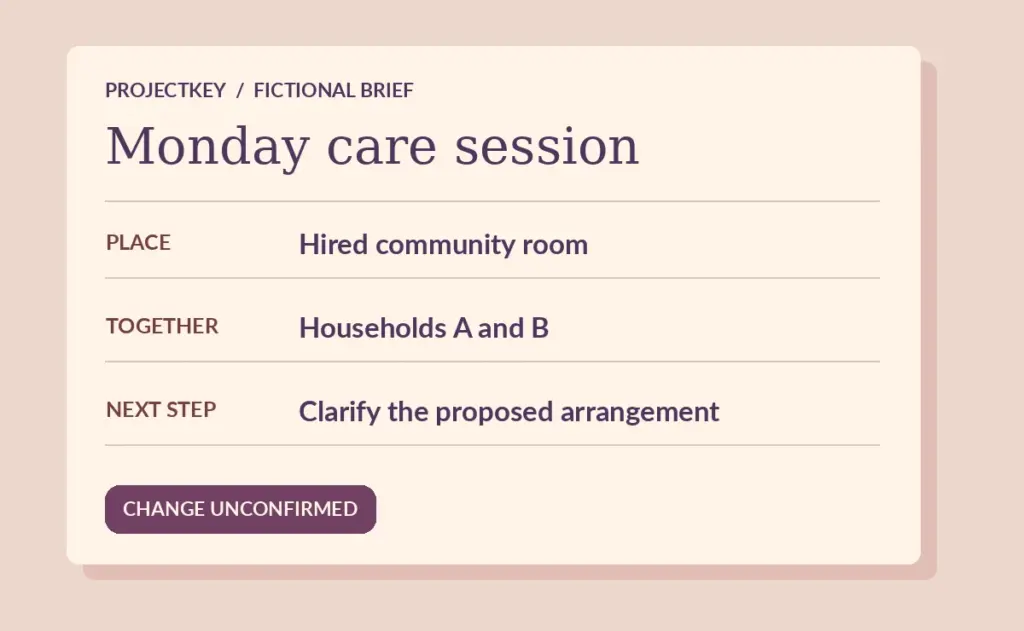
Imagine two proposals involving the same worker and hours. In proposal A, care takes place in a child’s home. Proposal B moves the activity to a hired community room. The change is not merely a new postcode in the diary: the location is part of the arrangement the official explanation asks readers to distinguish.
This example does not decide which registration or exemption applies. It shows why copying “nanny” from A into B would skip an important question. The revised proposal needs to be checked against the applicable guidance before it is treated as agreed.
Describe who is together, not just the weekly client list
The official post distinguishes the number of families served over time from the children cared for together. A weekly list can hide that difference. A useful brief therefore describes the intended sessions, the children’s family groupings and the home or other premises proposed for each session.
Do not place identifiable details about children into a broadly circulated planning document. The responsible people need the information appropriate to their role; an illustrative discussion can use neutral labels such as household A and household B.
Separate the proposal from its confirmation
An invented note might read: “Monday session proposed at the new room; location and arrangement sent for clarification; existing home-based arrangement remains the reference; change not yet confirmed.” That is more informative than a diary entry that silently assumes the move is ready.
Once the responsible person has checked the arrangement, record the dated answer and update the relevant working information. Keep the actual care arrangements and any registration record aligned with the applicable requirements.
A clear brief is not legal approval. Its value is that the question reaches the right person with the facts needed to answer it, rather than with a job title that conceals the change.