Start with a question you can act on
A broad aim such as “improve communication” is hard to review. Narrow it to one part of your own work: how you explain an activity to colleagues, prepare an invitation for families, or organise your planning notes. Avoid starting with a conclusion about a child or a family.
Try this form: “What do I need to understand about ___ before I decide whether to change ___?” State what is within your role, what needs team agreement and when you will review it. If the question needs specialist advice, use your institution’s professional channels.
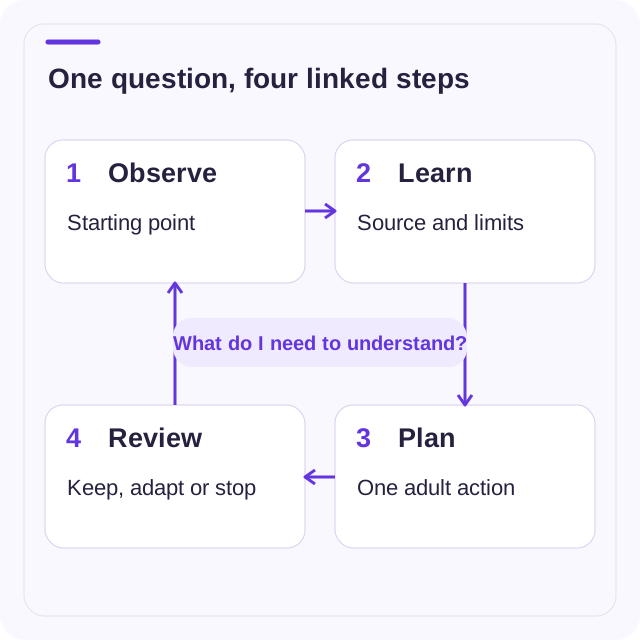
Follow four linked steps
Observe a starting point
Describe one routine in neutral language. Record context and an adult action you can revisit. Do not collect personal data merely because a worksheet has space.
Choose one learning input
Read a chapter, discuss a source with a colleague or select a relevant course. Note the author, date, claim and limits. Explain what the input helps you understand.
Plan one modest adjustment
Write the intended adult action and why it fits the question. Agree any required permissions and a review date. Keep necessary support in place.
Review and decide
Compare your notes with your starting question. Record unexpected effects, alternative explanations and what remains unknown. Choose to keep, adapt, stop or seek advice; a completed sheet does not prove effectiveness.
Use a blank plan
Working sheet: one question, one cycle
Write here, then print or copy your notes. Entries stay in this tab and are not sent or saved by this page. Copy them before leaving.
Download the blank plan as plain text. Keep completed notes in your institution’s approved storage; this site does not store them.
Check the plan before you start
A planning example, not a field report: you want to make your own handover notes clearer. You read guidance on concise recording, agree a simple note structure with a colleague, and review whether it helps the two of you find agreed actions. You would need more evidence to claim any effect on children’s outcomes. That boundary keeps the cycle manageable and its conclusions honest.
Continue with Observation notes or the professional-learning selection guide.