Keep four kinds of note apart
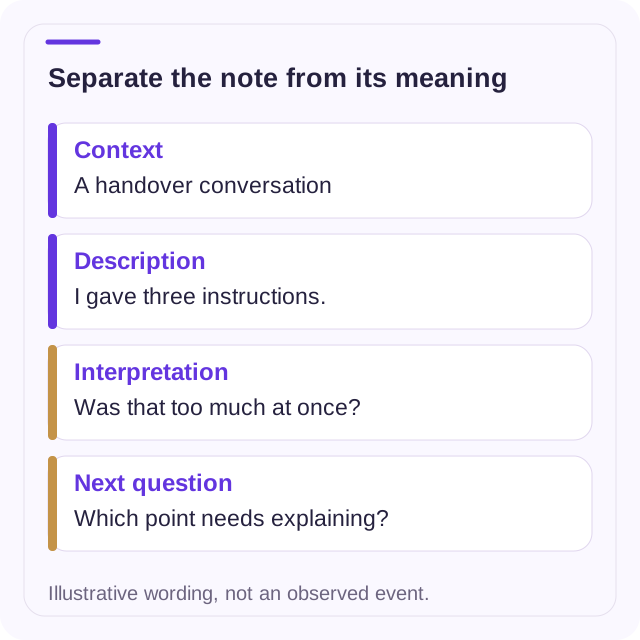
Context: where the routine happened, its purpose and relevant conditions. Description: the sequence or adult action that could be checked. Interpretation: a possible meaning, marked as such. Next question: what would help you understand it better.
For example, “I gave three instructions before asking for questions” describes an adult action. “My explanation was confusing” is an interpretation. It could prompt a useful question about clarity, but the first note alone does not establish another person’s understanding. This is a writing example, not an observed session.
Choose the smallest useful record
Decide the purpose before choosing the detail. A short note about your own explanation may answer your question without recording children’s names, family circumstances, images or audio. Follow your institution’s consent, confidentiality and safeguarding procedures for any actual observation. Use the appropriate reporting route when a concern needs action; do not leave it inside a reflective exercise.
Do not upload identifiable notes to this site or email them to the editorial desk. For professional discussion, remove identifying details and use approved institutional systems. A private learning note can still contain personal information.
Use the observation sheet
Working sheet: description and reflection
Write here, then print or copy your notes. Entries stay in this tab and are not sent or saved by this page. Copy them before leaving.
Review the wording with a colleague
Read the description aloud without the interpretation. Can a colleague tell what you recorded and what you inferred? Replace fixed labels about people with descriptions of the relevant action. Note missing context rather than filling it in. One episode supports reflection; it does not establish a pattern or a diagnosis.
Bring the note back to your learning question. If it does not help answer that question, shorten it or change the plan rather than collecting more information without a purpose.